Self-Tuning Prompts: Adapting Karpathy's Autoresearch Loop to Writing Quality
The original idea: a loop with no human in it #
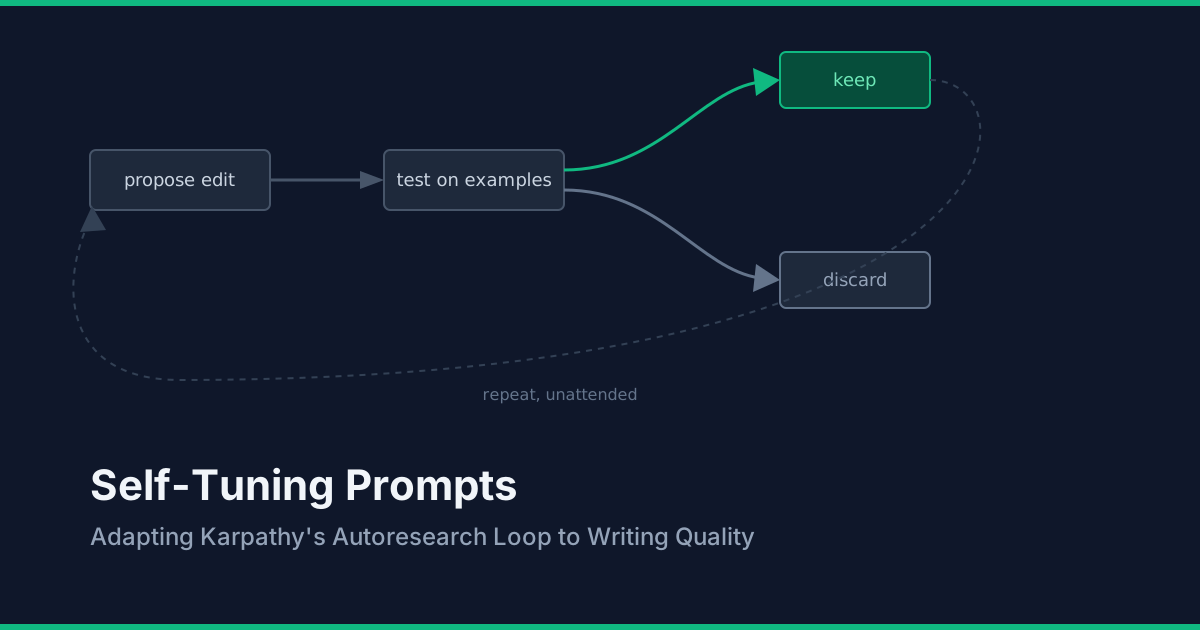
Karpathy’s project lets an AI rewrite its own training code, run a short training job, and check the result against a single number that measures how well the resulting model performs — lower is strictly better, and it’s cheap to compute after every attempt. If the number improves, the AI keeps its change. If it doesn’t, the change is thrown away and reverted. Repeat, unattended, many times an hour. One independent write-up of a real run found the loop working through hundreds of attempts unsupervised, keeping a good number of genuine improvements along the way, and meaningfully cutting the time needed to reach a target level of quality. The whole idea rests on one condition: a fast, trustworthy number you can check the AI’s work against every single time.